China Best Energy Efficient Patio Doors Suppliers

China’s best energy efficient patio doors suppliers are increasingly shaping modern residential construction. Their products combine thermal performance, daylight, ventilation, and practical design. However, choosing a reliable manufacturer requires more than comparing attractive catalog images.

Dr. Dariush Arasteh, a respected building-envelope scientist, has stated, “Windows are the weak link in the building envelope.” His observation also applies to large patio doors. A poorly insulated sliding panel can create cold interior surfaces, visible condensation, and uncomfortable drafts near the floor. High-performing energy efficient patio doors should therefore include low-emissivity glass, insulated frames, durable weather seals, and carefully tested air-leakage performance.

The strongest Chinese suppliers usually provide clear U-factor and solar heat gain coefficient data. They may also offer thermally broken aluminum, fiberglass, or reinforced uPVC frames. Tempered or laminated glazing improves safety and long-term durability. Yet specifications alone are not enough. Ask for independent test reports, production samples, warranty terms, and installation guidance. Factory quality control matters.

Small details matter.

A two-millimeter alignment error can weaken sealing. A poorly drained threshold may collect water after heavy rain. Even an excellent door can perform poorly when installed carelessly. This is where supplier experience becomes visible.

No manufacturer is perfect. Some brochures simplify complex performance figures. Others emphasize appearance more than lifecycle efficiency. Buyers should compare verified data, factory capability, climate suitability, and after-sales support. This guide examines leading China suppliers through those practical standards, helping importers, builders, and homeowners make a more informed decision about energy efficient patio doors.
China Best Energy Efficient Patio Doors Suppliers

What Makes Patio Doors Energy Efficient in China

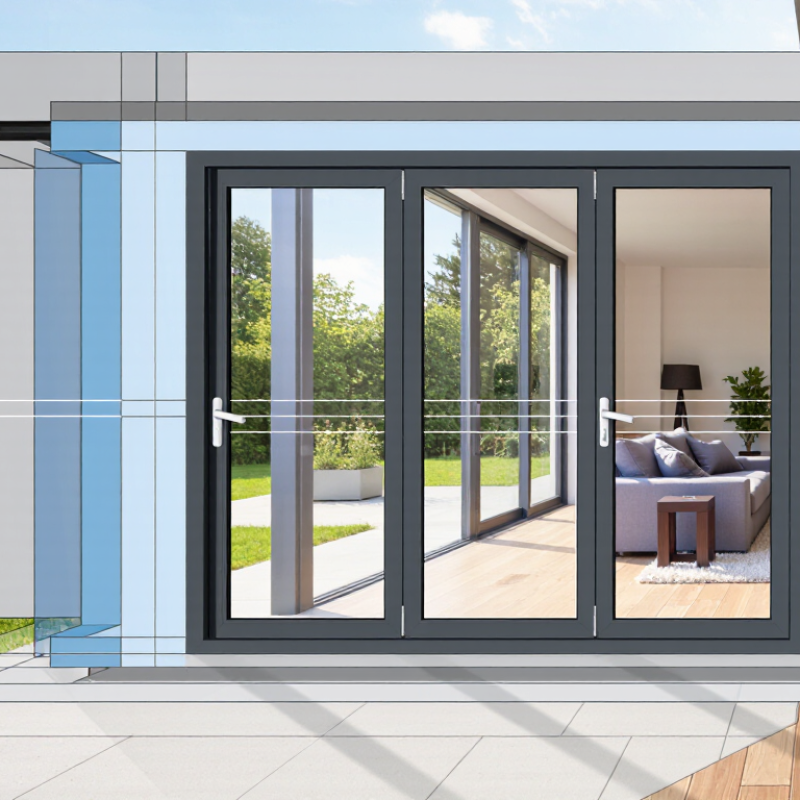
Choosing energy efficient patio doors from China requires more than comparing factory prices. The door’s full system matters. Low-emissivity glass can reduce heat transfer through the panel. Double glazing works well in many regions, while triple glazing suits colder climates. However, glass alone cannot prevent energy loss.

Look closely at the frame. Thermally broken aluminum separates the cold exterior from the warm interior. Multi-chamber uPVC frames can also improve insulation. Warm-edge spacers reduce heat movement around the glass edges. Reliable suppliers should provide U-value, air leakage, and water resistance test data. Ask for the test standard and report date. A lower quoted U-value is not automatically better. Sometimes, the installation details are missing.

Tips: Check corner joints, drainage holes, gasket quality, and locking pressure. Request a physical sample before placing a large order. Test the sample beside a window on a hot afternoon. Feel the frame temperature. Small gaps can create noticeable drafts. Factory experience is useful, but inspection remains essential. A supplier may offer excellent glass and still overlook poor sealing. Review drawings, hardware specifications, packaging, and installation guidance together. That extra step can prevent expensive corrections later.

What Makes Patio Doors Energy Efficient in China?

Lower U-values indicate better thermal insulation and reduced heat transfer. Compared with single glazing, insulated double glazing with a low-emissivity coating and argon gas can substantially improve energy efficiency. Actual performance depends on frame materials, edge spacers, installation quality, and local climate requirements in China.

Key Materials and Technologies Used by Chinese Patio Door Suppliers

China Best Energy Efficient Patio Doors Suppliers

Chinese patio door suppliers commonly combine thermally broken aluminum, Low-E glass, and insulated glazing units. These materials reduce heat transfer through the frame and glass. A typical unit may use double glazing with argon between the panes. Some projects need triple glazing for colder regions. It adds weight and cost.

The frame should include polyamide thermal barriers, often reinforced for large sliding panels. EPDM gaskets help limit air leakage around the sash. Warm-edge spacers reduce condensation along the glass edge. Multi-point locks improve compression and security. Better factories use CNC cutting, controlled assembly, and repeated checks for drainage holes. Small details matter.

Ask suppliers for U-value data, air-leakage results, water-resistance tests, and wind-load reports. Do not trust appearance alone. A smooth sample can still perform poorly after installation. On-site measurement is essential, especially for uneven masonry openings. Some suppliers offer impressive specifications but explain them poorly. That deserves careful review. Energy performance also depends on glass orientation, shading, sealant quality, and installer skill. No material solves every problem. A reliable supplier should discuss these limits clearly and provide traceable production records.

China Best Energy Efficient Patio Doors Suppliers - Key Materials and Technologies Used by Chinese Patio Door Suppliers

Component or Technology Common Material or Specification Typical Performance Data Energy-Efficiency Contribution Supplier Verification Points
Frame Material Thermally broken aluminum profiles Frame Uf commonly about 1.5–2.5 W/m²K Reduces heat transfer through the metal frame and limits interior surface condensation. Request profile cross-sections, thermal-break width, alloy grade, and tested frame U-value.
Thermal Break Polyamide insulating strips, often glass-fiber reinforced Typical strip widths: approximately 20–35 mm Separates the exterior and interior aluminum sections to create a lower-conductivity thermal barrier. Check strip material, width, mechanical locking method, and quality-control records.
Glass Configuration Double or triple insulating glass units Double glazing: commonly 20–28 mm; triple glazing: commonly 36–48 mm Multiple glass layers and sealed cavities reduce conductive and convective heat loss. Confirm glass thickness, spacer type, cavity width, edge-seal system, and maximum sash weight.
Low-E Coating Low-emissivity coating on one or more glass surfaces Double-glazed center-of-glass Ug commonly about 1.0–1.6 W/m²K Reflects long-wave infrared heat while allowing useful daylight to enter the room. Ask for the coating position, visible light transmission, solar factor, and glass-test documentation.
Insulating Gas Argon-filled sealed glass cavity Common nominal fill level: around 90% or higher at production Argon has lower thermal conductivity than air and can improve the insulating value of sealed glazing. Verify gas-filling equipment, fill-rate inspection, cavity seal quality, and long-term seal warranty.
Warm-Edge Spacer Stainless-steel, hybrid, or thermoplastic warm-edge spacer Lower thermal conductivity than traditional aluminum spacers Reduces heat loss at the glass perimeter and helps lower the risk of edge condensation. Confirm spacer material, corner construction, desiccant system, and compatibility with the selected glass.
Weather Sealing EPDM or high-quality thermoplastic elastomer gaskets Usually two or more continuous sealing lines Limits air leakage and water penetration around the sash, frame, and glass edge. Check gasket hardness, corner vulcanization or welding, replaceability, and air/water test results.
Sliding Track and Rollers Stainless-steel or corrosion-resistant aluminum track with adjustable rollers Load capacity commonly selected according to sash weight, often 100–300 kg per sash Maintains smooth operation and helps keep the sash properly aligned with the seals. Request cycle-test results, roller material, adjustment range, drainage design, and spare-part availability.
Threshold Design Thermally improved low-profile threshold with integrated drainage Performance depends on threshold height, drainage, and installation details Minimizes thermal bridging at floor level while directing rainwater away from the interior. Review accessibility requirements, drainage outlets, sill pan details, and water-penetration test data.
Door Configuration Lift-and-slide or standard sliding system Lift-and-slide systems support larger and heavier panels than standard sliders Lift-and-slide hardware can improve gasket compression when closed, supporting better air tightness. Confirm maximum panel dimensions, maximum glass weight, hardware service life, and installation tolerances.
Solar Control Solar-control Low-E glass or tinted glass Solar heat gain is specified by the glass solar factor or whole-door SHGC Reduces unwanted summer heat gain, especially on south- or west-facing elevations. Match solar-control level to the climate; check visible light transmission and risk of overheating.
Whole-Door Thermal Performance Frame, glass, spacer, edge, and hardware considered together Typical high-performance target: Uw approximately 1.0–1.8 W/m²K Whole-door U-value provides a more realistic estimate of heat loss than glass Ug alone. Require a whole-product calculation or test report using the exact size, glass, frame, and configuration.
Air Tightness Continuous gaskets, accurate corner joining, and correctly adjusted hardware Often reported as air leakage at 75 Pa; class or rating depends on the test standard Lower air leakage reduces drafts and unwanted heating or cooling demand. Request test pressure, leakage result, test size, standard used, and installation condition.
Water Resistance Sloped sill, pressure-equalized drainage, sealed corners, and compression gaskets Performance is normally reported by a pressure-based water test Helps prevent rainwater from entering the room and protects insulation around the opening. Check the tested pressure, drainage path, sill design, and whether the result applies to the complete door.
Acoustic Glazing Laminated acoustic glass or asymmetric insulated glass Whole-door sound reduction commonly varies from about 30–45 dB Reduces traffic and outdoor noise when combined with airtight seals and correct installation. Request the tested Rw or STC value for the complete door, not only the glass pane.
Surface Finish Powder coating or anodized aluminum finish Durability depends on coating thickness, pretreatment, exposure, and color Protects the aluminum from weathering and supports a longer service life with less maintenance. Confirm coating process, pretreatment, color tolerance, film thickness, and applicable durability tests.
Installation Interface Insulated perimeter installation with compatible tapes, membranes, and low-expansion foam Installation quality can materially change the achieved Uw and air-leakage result Prevents thermal bridges and air leakage at the junction between the door frame and wall opening. Request installation drawings, anchoring points, tolerance limits, sill flashing details, and sealing sequence.

How to Evaluate Chinese Suppliers for Quality and Performance

China Best Energy Efficient Patio Doors Suppliers

How to Evaluate Chinese Suppliers for Quality and Performance

A reliable supplier should prove performance, not merely promise it. The U.S. Department of Energy reports that windows can cause 25%–30% of residential heating and cooling energy use. Therefore, request tested U-factor, solar heat gain coefficient, air leakage, and water resistance values. Check whether reports come from accredited laboratories. Compare the tested door size with your intended specification. Results can change with glass area, frame design, and installation.

Factory experience matters. Ask for production records, material certificates, and quality-control checkpoints. Inspect thermal breaks, corner joints, rollers, seals, and drainage paths. A useful audit should include random sampling, not only showroom pieces. The International Energy Agency states that buildings consume about 30% of global final energy. Small improvements can matter at scale. Yet, I would not trust a low U-factor alone. A poorly fitted door may still leak air and create condensation.

Tips: Send a detailed drawing and climate data before requesting quotations. Order a working sample. Test smooth movement, lock compression, visible gaps, and water drainage. Request independent testing after design approval. Clarify warranty limits, replacement parts, packaging, and installation guidance. Keep every specification in writing. A supplier may pass one laboratory test but fail repeated opening cycles. That weakness is easy to miss. Reflect on your own evaluation, too: did you compare performance, or only price and photographs?

Energy Efficiency Standards, Certifications, and Testing Requirements

China Best Energy Efficient Patio Doors Suppliers

Energy Efficiency Standards, Certifications, and Testing Requirements

Energy-efficient patio doors should be judged by measured performance, not attractive product claims. Suppliers should provide U-factor and solar heat gain coefficient data for the complete door assembly. Lower U-factor usually means better insulation, while suitable solar control depends on the local climate.

Reliable suppliers use laboratories accredited to ISO/IEC 17025. Testing should examine air leakage, water penetration, wind resistance, thermal transmission, and operating durability. In the United States, performance reports may follow national fenestration rating procedures. European projects may reference EN 14351-1 and related thermal standards. Requirements differ by destination.

Details matter.

Ask for reports showing the tested size, glass type, frame material, spacer design, and weatherstrip arrangement. A result for a small sample may not represent a wide sliding door. Installation testing also deserves attention because poor shimming can create gaps around the frame. The most efficient glass cannot correct careless installation.

Certifications should be current, traceable, and linked to the exact model. Factory quality controls should record batch numbers, sealant application, corner joining, and glass inspection. It is easy to overtrust a certificate. Some documents confirm only a single test, not consistent production. A supplier should explain retesting schedules and corrective actions when results fail. That transparency is imperfect, but it is more useful than polished marketing language.

Choosing the Right Chinese Supplier for Your Project

Choosing the right Chinese supplier for energy-efficient patio doors requires more than comparing online prices. Start with the door’s tested U-value, air leakage, water resistance, and wind-load performance. Ask for current reports from recognized testing laboratories, not screenshots or outdated files. The frame material, thermal break design, glazing thickness, spacer type, and sealing system should match your climate.

Ask for proof.

Request a factory video call, production photos, and a sample with the same glass and hardware specified for your project. Check how the supplier handles cutting, corner joining, drainage holes, and surface protection. A polished sample can hide weak installation details. Inspect the packaging too; damaged corners can create expensive delays before installation begins. Confirm minimum order quantities, tooling charges, replacement policies, and realistic production dates in writing.

Communication is equally important. Choose a supplier that answers technical questions clearly and records every revision. Review shop drawings before mass production, including opening direction, frame depth, screen position, and fixing points. Independent pre-shipment inspection can verify dimensions and operating quality. It adds cost, but one inspection may prevent a container of unusable doors. Some suppliers promise excellent insulation without explaining the test conditions. That deserves a second question. The best choice is not always the cheapest factory. It is the supplier that provides traceable evidence, consistent workmanship, and practical support when the project changes.