Choosing China’s top energy windows and doors suppliers requires more than comparing prices or browsing polished product catalogs. A reliable supplier should demonstrate tested thermal performance, stable frame quality, accurate manufacturing, and consistent after-sales support. Look for evidence such as U-value reports, air-leakage results, water-tightness testing, thermal-break materials, and project references from similar climates. A window may look impressive in a showroom, yet perform poorly when installation gaps remain around the frame.
Real details matter. Ask how the supplier controls glass spacing, corner welding, gasket compression, and hardware adjustment. Examine factory photographs, sample sections, and quality records. A serious manufacturer should explain its process clearly, not hide behind vague claims. Site experience also helps. Installers often notice problems that brochures never mention, including difficult drainage, weak sealing, or warped doors after seasonal changes.
Dr. Wolfgang Feist, founder of the Passivhaus Institut, described the standard as “truly energy efficient, comfortable, affordable and ecological at the same time.” His statement captures the wider purpose of energy windows and doors: reducing heat loss while improving indoor comfort and long-term value. Still, no supplier ranking fits every project. Coastal buildings need different protection from cold-climate homes, and a premium system can fail without skilled installation. The Chinese market offers capable manufacturers, but it is not perfectly transparent. Buyers should verify certifications independently, inspect samples, and compare complete system performance rather than isolated specifications. Some conclusions may remain uncertain. That is acceptable when careful evaluation replaces confident guesswork.
China Top Energy Windows and Doors Suppliers?
What Defines an Energy-Efficient Windows and Doors Supplier in China?
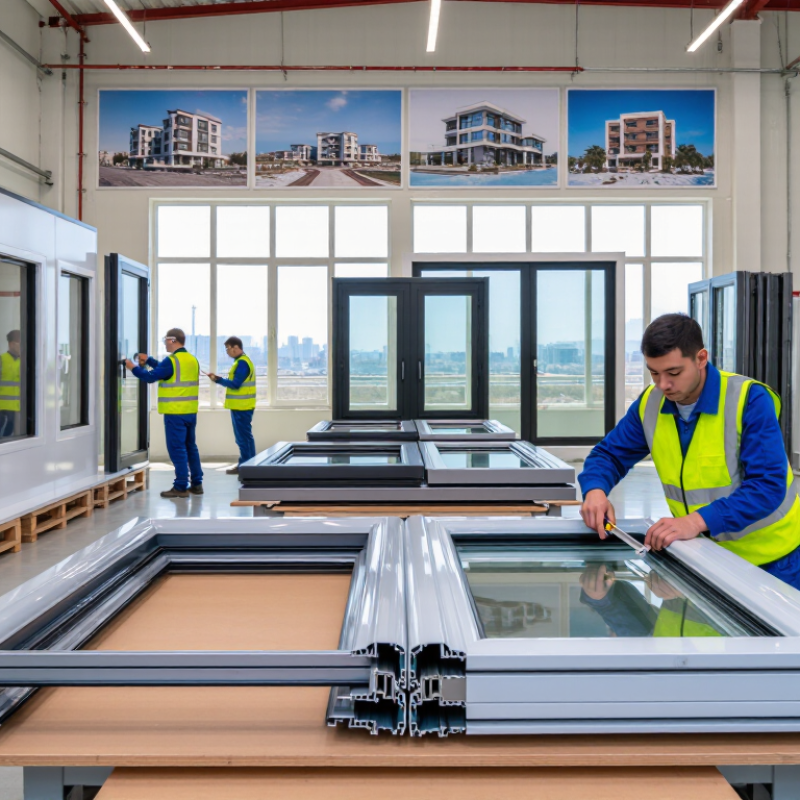
An energy-efficient supplier offers more than attractive frames and low prices. It should explain U-values, solar heat gain, air leakage, and water resistance in clear language. Experienced suppliers provide test reports from recognized independent laboratories. They also share production details, glass specifications, and installation guidance. A factory visit can reveal important facts. Look for organized cutting areas, sealed-glass inspection, and careful packaging. These details often matter after delivery.
Tips: Ask for full performance data, not general claims. Request a sample corner with frame, glass, gasket, and hardware together. Test its operation several times. Confirm lead times, replacement procedures, and warranty limits in writing. Your local climate matters too. A design suitable for a cold northern city may perform poorly in a hot, humid region.
A dependable supplier understands that installation can reduce excellent window performance. It should provide fixing methods, drainage details, and training for installers. Technical support should continue after shipment. Check whether the supplier records batch numbers and handles defects with evidence. Polished brochures are not enough. A small mismatch in color or hardware may still occur, even in a capable factory. That possibility deserves honest discussion. Buyers should compare samples, documented tests, and real project feedback before making a decision.
| Evaluation Dimension | Recommended Technical Benchmark | What a Capable Supplier Should Provide | Relevant Standard or Test Method | Why It Matters for Energy Efficiency |
|---|---|---|---|---|
| Whole-Window Thermal Transmittance | Lower whole-window U-value; approximately 0.80–1.40 W/m²·K for high-performance systems, depending on climate, glazing, frame, and size. | Documented U-values for the complete window or door assembly rather than frame-only or center-of-glass figures. | ISO 10077-1, ISO 10077-2, EN 14351-1, or an accredited laboratory calculation or test report. | A lower U-value reduces heat transfer through the complete installed product. |
| Frame Material and Thermal Break | Thermally broken aluminium, multi-chamber uPVC, timber, or composite frame construction designed for the target climate. | Frame cross-sections, thermal-break material details, chamber drawings, and verified frame Uf values. | EN ISO 10077-2 and applicable national building-energy requirements. | Frame design affects interior surface temperature, condensation risk, and overall window performance. |
| Insulating Glass Unit | Double or triple glazing with low-emissivity coating, inert-gas filling where specified, and an appropriate warm-edge spacer. | Glass make-up, coating position, spacer type, gas-fill specification, cavity width, and sealant details. | EN 1279 series, ASTM E2190, or equivalent insulating-glass-unit standards. | Glass is often the largest area of a window; its specification strongly influences heat loss and solar gain. |
| Solar Heat-Gain Control | Solar heat gain coefficient or g-value selected according to orientation, climate, shading, and cooling requirements. | Verified SHGC or g-value data for the selected glazing and complete product configuration. | ISO 52022-3, EN 410, NFRC 200, or an equivalent recognized method. | Balanced solar control can reduce summer cooling loads while preserving useful passive solar heat where appropriate. |
| Air Permeability | High-performing products commonly target Class 3 or Class 4 under EN 12207, with the required class depending on project conditions. | Air-leakage test results for representative window and door sizes, opening types, and operating conditions. | EN 1026 and EN 12207, or ASTM E283. | Lower uncontrolled air leakage improves comfort and reduces heating or cooling energy loss. |
| Watertightness | Performance class selected according to building height, exposure, local rainfall, and façade location. | Water-penetration test reports, drainage details, gasket specifications, and installation recommendations. | EN 1027 and EN 12208, or ASTM E331. | Reliable water resistance protects insulation, finishes, seals, and long-term thermal performance. |
| Wind Load Resistance | Design resistance based on project wind speed, building height, exposure category, window size, and anchorage. | Structural calculations or test results covering the actual profile, glass, hardware, and fixing arrangement. | EN 12211 and EN 12210, or ASTM E330/E330M. | Correct structural design prevents excessive deflection that can damage seals and increase air leakage. |
| Thermal-Bridge Control | Continuous insulation at frame interfaces, insulated thresholds, and properly detailed perimeter connections. | Junction details, installation drawings, Ψ-value calculations where applicable, and sill or threshold solutions. | ISO 10211 and ISO 10077 series. | Installation interfaces can create significant heat loss even when the window itself has a low U-value. |
| Condensation Resistance | Interior surface temperatures and condensation-resistance performance appropriate for the project’s indoor humidity and outdoor design temperature. | Condensation analysis, thermal-bridge details, recommended indoor humidity limits, and ventilation guidance. | ISO 13788, ISO 10077-2, or project-specific hygrothermal analysis. | Good condensation control supports indoor air quality, durability, and resistance to mould growth. |
| Hardware and Weather Seals | Multi-point locking, durable friction or compression seals, corrosion-resistant components, and adjustable hardware where required. | Hardware load ratings, gasket materials, replacement procedures, adjustment instructions, and maintenance schedules. | EN 12207, EN 12208, EN 13115, and relevant hardware standards. | Seal compression and hardware stability help preserve air and water performance during service life. |
| Product Testing and Traceability | Independent testing for representative configurations, including opening type, dimensions, glazing, and hardware. | Reports showing laboratory identity, test date, specimen details, measured results, and product traceability. | ISO/IEC 17025 laboratory accreditation and applicable product standards. | Transparent testing reduces the risk of relying on unverified or non-comparable performance claims. |
| Quality Management | Documented production controls, incoming-material inspection, process checks, final inspection, and corrective-action procedures. | Quality manual, inspection records, batch identification, sampling plans, and non-conformance procedures. | ISO 9001 is commonly used as a quality-management framework. | Consistent manufacturing is necessary to reproduce tested energy performance in delivered products. |
| Customization and Climate Adaptation | Design options matched to cold, temperate, hot-humid, hot-dry, coastal, or high-wind conditions. | Climate-specific glazing, frame, shading, drainage, corrosion-protection, and ventilation recommendations. | Applicable local building codes, ISO standards, EN standards, ASTM standards, or project specifications. | Energy efficiency depends on climate and building use; one specification is not suitable for every market. |
| Installation Support | Installation system designed to control air, water, vapour, and thermal continuity at the wall-to-window junction. | Approved installation manuals, anchoring details, sealant compatibility information, and installer training. | ISO 10077, relevant national installation standards, and project-specific façade requirements. | Poor installation can significantly reduce the performance of otherwise high-efficiency windows and doors. |
| Environmental and Durability Factors | Durable coatings, recyclable materials where feasible, low-emission sealants, and service-life planning. | Material declarations, coating specifications, corrosion-resistance data, maintenance guidance, and end-of-life information. | ISO 14001, ISO 14025, EN 13986 where relevant, and applicable environmental product standards. | Long service life and responsible material selection can reduce replacement frequency and lifecycle impacts. |
| Note: The benchmarks above are general procurement and evaluation guidelines, not a ranking of individual suppliers. Final requirements should be confirmed against the project location, building envelope design, local regulations, window dimensions, glazing selection, installation method, and intended energy target. | ||||

© 2025 KT Fairglass. | The #1 Doors & Windows Company in Vernon BC
