Choosing the best type of home windows and doors is not simply a style decision. It affects comfort, energy use, security, noise, maintenance, and long-term repair costs. A bright glass wall may look impressive, yet it can overheat a south-facing room without suitable shading. A solid insulated door may save energy, but poor threshold installation can still create drafts.
Building-science expert Dr. Joseph Lstiburek, founder of Building Science Corporation, has often emphasized, “A building is a system.” That principle is essential when comparing home windows and doors. The glass, frame, wall, flashing, seals, and ventilation must work together. Replacing one component rarely solves every problem.
This guide will examine vinyl, wood, aluminum, fiberglass, and composite options. It will also compare double-pane and triple-pane glass, low-emissivity coatings, U-factor, solar heat gain coefficient, and air-leakage ratings. These details matter. A coastal home may need corrosion-resistant hardware. A cold-climate house may benefit from triple glazing and insulated frames. A hot region may need low solar heat gain and exterior shading.
There is no universal winner. That is easy to forget. Budget, climate, orientation, architecture, and maintenance expectations all change the answer. Installation quality can even outweigh a premium product. A beautiful window with missing flashing is still a future leak.
The following outline focuses on practical selection rather than showroom claims. It also questions common assumptions, because the most expensive choice is not always the most durable or efficient.
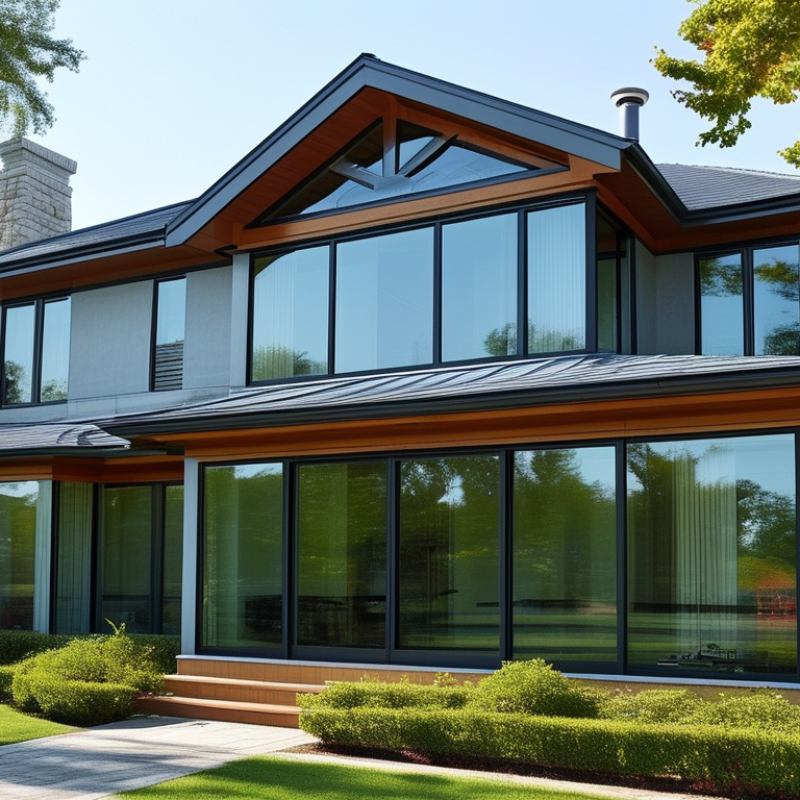
What Is the Best Type of Home Windows and Doors?
Windows can quietly increase heating and cooling costs. The U.S. Department of Energy’s Energy Saver guidance links windows to about 25–30% of residential heating and cooling energy use. That loss often appears as a cold floor beside the glass, or a warm room near a sunny door. The number is an estimate, not a promise for every home. Climate, installation, orientation, and household habits change the result.
Low-emissivity double-pane windows are a practical starting point for many homes. Triple-pane units may perform better in colder regions, but their added weight and cost need careful evaluation. DOE recommends comparing U-factor and solar heat gain coefficient ratings. Lower U-factor generally means better insulation. A suitable solar heat gain coefficient can reduce unwanted summer heat while preserving useful winter sunlight. Ratings matter more than appearance alone.
Doors deserve equal attention. A well-insulated solid door can reduce drafts, while glass doors need efficient glazing and tight frames. The National Fenestration Rating Council explains that certified performance ratings help compare products under consistent conditions. EIA’s 2020 Residential Energy Consumption Survey also shows that space heating and air conditioning are major household energy uses, although regional patterns differ. Installation remains the weak point. Even excellent windows perform poorly when gaps surround the frame. A small air leak can be felt. Recheck assumptions before choosing.
The best choice depends on climate, orientation, ventilation, daylight needs, and installation quality. Lower U-factor means better insulation; lower air leakage means a tighter product; SHGC should be selected according to the amount of solar heat a room needs or should avoid.
| Product Type | Typical Construction | Typical Whole-Product U-Factor | Typical SHGC | Air-Leakage Target | Best Application | Main Advantages | Important Trade-Offs |
|---|---|---|---|---|---|---|---|
| Single-Pane Window | One layer of glass with a basic frame | 0.90–1.20 | 0.60–0.80 | As low as practical; replace if drafts are substantial | Historic buildings, unconditioned spaces, or temporary use | Low initial cost; simple construction | Highest heat loss, condensation risk, and outdoor-noise transfer |
| Double-Pane Clear-Glass Window | Two glass panes separated by an insulating air or gas-filled space | 0.48–0.65 | 0.55–0.75 | Prefer tested products at or below 0.30 cfm/ft² | Mild climates and budget-conscious replacements | Better insulation than single pane; moderate cost | Higher solar heat gain and lower insulation than low-emissivity glass |
| Double-Pane Low-E Window | Two panes with a low-emissivity coating and insulating gas space | 0.25–0.35 | 0.25–0.55 | Target ≤ 0.30 cfm/ft² when tested at 1.57 psf | Most mixed-climate homes and many replacement projects | Strong balance of insulation, solar control, daylight, and cost | Performance varies significantly by coating, frame, spacer, and installation |
| Triple-Pane Low-E Window | Three panes with two insulating spaces and low-emissivity coatings | 0.15–0.25 | 0.20–0.45 | Target ≤ 0.30 cfm/ft²; tighter is preferable | Cold climates, high-performance homes, and noise-sensitive rooms | Lowest heat transfer, warmer interior glass, and improved sound reduction | Higher price, greater weight, and potentially less visible light |
| Low-Solar-Gain Window | Double- or triple-pane unit with a coating designed to reduce solar radiation | 0.15–0.35 | 0.20–0.40 | Target ≤ 0.30 cfm/ft² | Hot climates and large west- or south-facing exposures | Reduces unwanted summer heat and cooling demand | May reduce useful winter solar heat and increase heating needs in some locations |
| High-Solar-Gain Low-E Window | Low-emissivity unit that allows more controlled solar heat transmission | 0.20–0.35 | 0.45–0.60 | Target ≤ 0.30 cfm/ft² | Cold climates and sun-facing elevations with good shading control | Can provide useful passive solar heat during cooler months | Requires exterior shading or blinds to limit summer overheating |
| Insulated Opaque Exterior Door | Foam-insulated steel or fiberglass door with limited glazing | 0.10–0.25 | Not applicable or very low | Use continuous weatherstripping and an adjustable threshold | Main entrances, side doors, and service doors | Usually offers better thermal performance than a heavily glazed door | Less daylight and visibility; frame and threshold quality remain critical |
| Insulated Glazed Exterior Door | Insulated door slab with double- or triple-pane low-E glazing | 0.20–0.35 | 0.25–0.55 | Target low leakage with continuous perimeter seals | Entries where daylight and outdoor views are important | Combines natural light with improved insulation compared with single glazing | More glass increases heat gain, heat loss, glare, and purchase cost |
| Sliding Glass Door | Large glazed panels with sliding tracks and a framed threshold | 0.25–0.45 | 0.25–0.55 | Inspect track seals, interlocks, and threshold drainage carefully | Patios and wide openings where swing clearance is limited | Wide views, daylight, and space-efficient operation | Track and roller systems can be more vulnerable to air and water leakage |
| Insulated French or Hinged Door | One or two hinged insulated slabs with compression weatherstripping | 0.20–0.35 | 0.25–0.55 | Compression seals should close evenly on all sides | Primary entries and openings requiring a strong weather seal | Good sealing potential, durable threshold design, and flexible glazing options | Needs swing clearance; alignment and latch adjustment affect performance |
How to read the ratings: U-factor measures heat flow through the complete product; lower values indicate better insulating performance. SHGC, or Solar Heat Gain Coefficient, indicates how much solar heat enters through the product; lower values reduce solar heat gain.
Air leakage: The commonly used test reference is cubic feet per minute per square foot at a pressure difference of 1.57 pounds per square foot. A lower value generally indicates a tighter product.
Energy context: The U.S. Department of Energy estimates that windows are responsible for approximately 25–30% of residential heating and cooling energy use. Actual results depend on window area, orientation, climate, shading, HVAC efficiency, and installation quality.
Selection guide: In cold climates, prioritize low U-factor and consider a moderate-to-higher SHGC on appropriately sun-exposed façades. In hot climates, prioritize low U-factor, low SHGC, exterior shading, and careful air sealing. For all climates, compare whole-product ratings rather than glass-only values.




© 2025 KT Fairglass. | The #1 Doors & Windows Company in Vernon BC
